
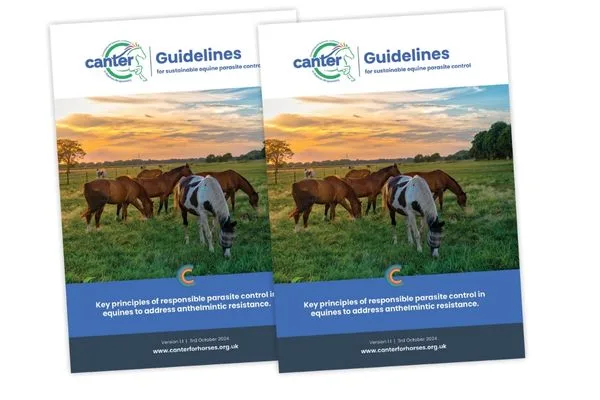
CANTER rolls out first cross-sector guidelines to combat wormer resistance
CANTER (Controlling ANTiparasitic resistance in Equines Responsibly) has rolled out its first set of industry-wide guidelines for equine worm control, marking a significant step forward in tackling the growing issue of wormer resistance in UK horses. These guidelines, launched at the Equine Infectious Disease meeting on 3 October 2024, are designed to assist veterinary surgeons, pharmacists, and Suitably Qualified Persons (SQPs) in their prescribing practices and to promote sustainable worm control strategies among their equine clients.
The guidelines, which are free to access, set out evidence-based principles, such as pasture and horse management techniques, the use of monitoring tools like worm egg counts, and a risk-based approach to estimating parasite transmission potential. The aim is to slow down resistance by encouraging prescribers to move away from routine blanket treatments, which select for drug-resistant worms, and instead focus on tailored treatment plans informed by specific monitoring data.
A collaborative approach to equine health
Dr Alison Pyatt, chair of CANTER, highlighted that this is a pivotal moment in the fight against anthelmintic resistance. She emphasised that the guidelines represent a collaborative effort across the equine sector, with input from vets, parasitologists, and other experts. The guidelines are positioned as a live resource that will continue to evolve, providing practical tools and insights to support prescribers in making informed, evidence-based decisions.
The guidelines advocate for a shift in mindset, prioritising non-chemical management strategies and urging prescribers to consistently apply monitoring tools to determine whether treatment is necessary. By encouraging this behavioural shift, CANTER aims to preserve the efficacy of current treatments and safeguard equine health for future generations.
Industry-wide support for the guidelines
The launch has been welcomed by key figures in the equine industry. Roly Owers MRCVS, Chief Executive of World Horse Welfare, praised the publication of the guidelines as a major step towards addressing a critical threat to equine health and welfare. He noted that this document will be instrumental in providing clarity and consistency in how prescribers and horse owners approach parasite control.
The guidelines, initially developed for UK prescribers, are expected to pave the way for further educational resources aimed at horse owners. By engaging both prescribers and the equine community, CANTER hopes to instil sustainable practices that will minimise the impact of wormer resistance and improve long-term equine welfare.
Key takeaways for the equestrian trade
From a trade perspective, these guidelines mark a significant development for professionals in the equine sector. Veterinary surgeons, pharmacists, and SQPs are encouraged to adopt these principles in their day-to-day prescribing practices to tackle the mounting issue of wormer resistance. The guidelines also emphasise the importance of continuous education, as future resources will be directed towards horse owners to reinforce these strategies.
As resistance to wormers continues to pose a serious challenge to equine health, industry-wide adoption of these guidelines will be crucial. By promoting responsible prescribing and sustainable practices, CANTER’s initiative has the potential to reshape how the equine trade approaches parasite control, ultimately benefiting the welfare of horses across the UK.
For further information, the CANTER Guidelines are now available online at www.canterforhorses.org.uk