When heritage shifts – what the Charles Owen story means for the trade
Few announcements have moved through the equestrian industry quite as quickly as the confirmation that Charles Owen will end UK manufacturing on nineteen December. The original update, intended for retail partners, spread across social media within hours. What followed was a wave of questions from riders, a flurry of concern from retailers and a level of public debate we have not seen around a safety brand for some time.
To many, it sounded like the end of an era. A century of British manufacturing, paused almost overnight. Yet when you look closer, the situation is far more layered than the headlines suggest.
Understanding the decision
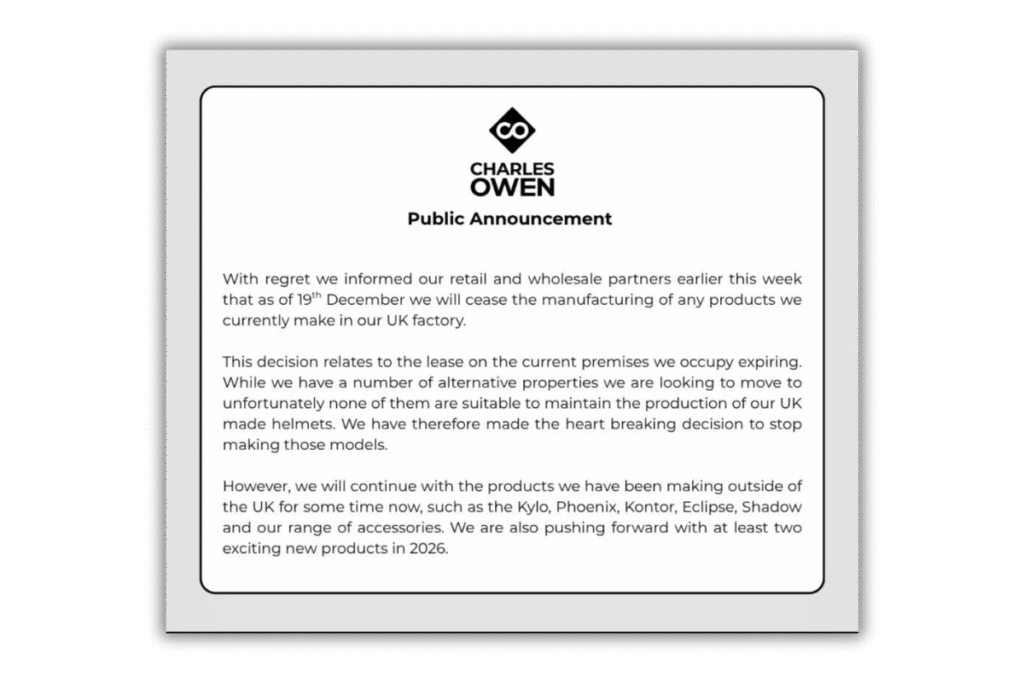
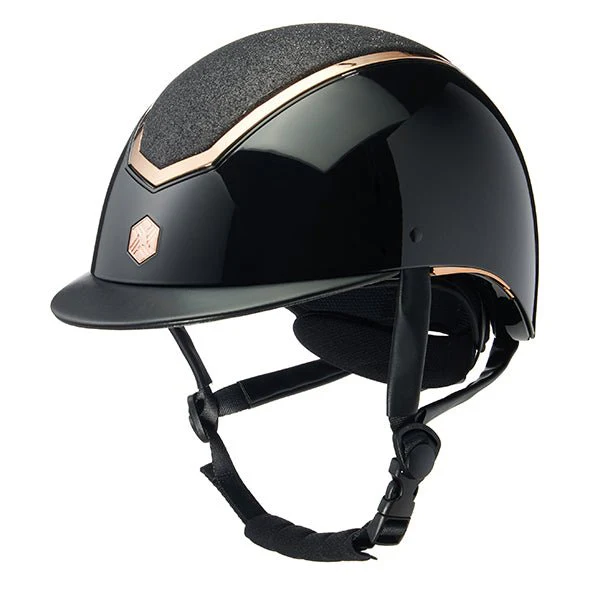
The core reason given by the company centres on its lease ending at its long-standing Wrexham site. Despite reviewing alternative properties, none were suitable for the specialist machinery and processes needed for their UK-made models. As a result, the final production run will conclude this December. While some of these helmets are produced in modest volumes, they hold strong sentimental and practical value within showing circles and among riders who prefer traditional styling.
Outsourced models, including Kylo, Phoenix, Kontor, Eclipse and Shadow, continue without disruption. Product development for 2026 also remains on track. In effect, the brand is not closing, but changing where certain models are produced. In the meantime, retailers are working through the remaining UK-made stock, with availability tightening as expected.
As the editor of Equestrian Business, Vanessa Britton observed that this scenario highlights just how vulnerable specialist manufacturing becomes when a company’s premises are not secured for the long term. A lease expiry might sound like a routine administrative matter, she commented, but when you rely on a highly skilled team and specialised equipment, the impact is profound.

The human impact
The public statement makes no direct reference to staff, yet the trade knows the story behind the scenes. Skilled craftspeople at Wrexham now face redundancy at a difficult point in the year. These are individuals who have shaped, stitched and finished helmets worn by generations of riders. Their precision and experience underpin the safety standards our sector relies on.
Vanessa also pointed out that losing such specialised knowledge is more than a local issue—it is a loss for the entire industry. Once these skills leave the workforce, rebuilding them is a challenge that cannot be easily solved. For a sector built on trust and safety, acknowledging this human impact is crucial.
The media storm
While the announcement itself caused understandable disappointment, it was the national media response that intensified the debate. One broadsheet framed the story around royalty, celebrity riders and the cost of certain models, rather than the broader realities of a five-billion-pound industry serving millions.
Claire Williams, Executive Director of the British Equestrian Trade Association, challenged this coverage directly. She noted that the article reinforced outdated assumptions about equestrian sport and overlooked the fact that it is the showing community, not the hunting world, that will feel the most immediate impact.
Vanessa remarked that this episode demonstrates how vital it is for the industry to respond swiftly to misconceptions. When the wider media chooses to rely on clichés, the trade must step in with accurate information. If not, the public’s understanding of our sector risks being skewed by outdated stereotypes.
Where does this leave the trade?
Retailers now find themselves balancing reassurance with practical advice. Some customers fear the brand is closing entirely. Others are seeking UK-made helmets while they remain available. Clear, steady communication is essential.
For manufacturers, the situation highlights the growing pressures on British production. Rising operational costs, shorter commercial leases and fewer suitable industrial sites all play a part. When a heritage brand cannot relocate specialist manufacturing in time, it points to deeper structural challenges that must be addressed.
Vanessa emphasised that across the supply chain, this is a moment for reflection. When one established manufacturer faces such a significant shift, it prompts important questions for others who rely on similar production environments.
A moment for reflection
This announcement is more than a factory change. It is a reminder that heritage alone cannot protect British manufacturing from modern pressures. It is also a reminder that the narrative around equestrian sport must be guarded carefully. Outdated stereotypes harm the trade, the riders it supports and the wider perception of the sector.
As we move into 2026, several questions remain. Could UK production resume if a suitable site becomes available? Can the sector retain or recreate the skills now at risk? And how do we ensure the public receives an accurate picture of a sector that boosts the rural economy and enriches communities nationwide?
As retailers, manufacturers and trade bodies navigate what comes next, Vanessa concludes that the industry must continue to challenge misconceptions and present the true story of equestrian life—one centred on community, expertise and care, not stereotype.