
With spring-like temperatures, more sunlight, and overnight frosts, sugar levels in grass can become dangerously high, leading to the onset of laminitis and pituitary pars intermedia dysfunction (PPID). Laminitis has significant welfare implications for horse owners, which is why it’s key to talk to your customers about getting advice from a nutritionist or vet if they are worried about springtime feeding.

The wet coat of a horse with PPID
As one of the most common and crippling diseases affecting horses and ponies, understanding how to support owners of equines affected by laminitis is a great asset for any feed merchant. Similarly, PPID or Cushing’s Disease can cause owners great concern. Excess weight causes metabolic changes, leading to insulin resistance and leptin resistance which is very difficult to control. Aside from the extra stress on the joints and major organs, the metabolic changes can cause chronic laminitis.
“Cushing’s Disease can cause owners great concern”
Ensuring you have a basic understanding of both conditions will greatly improve how well you can support customers. With an internet full of accurate, information, comes a substantial amount of misinformation, normally from social media, which can lead to added stresses for horse owners. If you can provide accurate advice and recommendations, you may be able to remove some of your customer’s worry and set them on a correct ‘next step’ for their horse or pony’s condition.

Obesity is one of the main contributors to the onset of laminitis
Feeding first
As an equine retailer, you will be met with customers that know exactly what they are looking for. They will have done their research and are ready to purchase. Others will turn to you in their time of desperation to help find a feed that will suit their
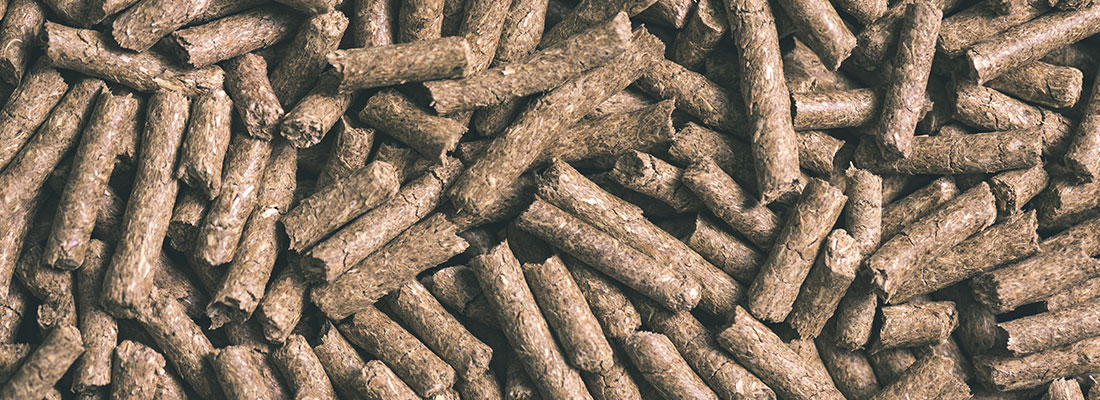
laminitic horse or pony and their budget. Since laminitis is a health issue, you need to think about stocking feeds that appeal to all budgets, as well as in different forms to support horses that are fussy, as well as older horses that often have poorer tooth quality. Some older equines are unable to consume the long strands of more traditional forages due to dental issues and they may require a suitable forage replacer such as a specially formulated low sugar chaff or soaked feed.
Feeding a laminitic horse or pony, or one suffering from PPID, in short, means sugar intake must be controlled. First and foremost, starch/sugar/fructans must be reduced, followed by keeping the protein level below 12%. For retailers looking to stock suitable feed for these conditions, having an in-depth understanding about your feeds is helped greatly by understanding the effects certain components have upon the horse’s digestive system. Too much protein in the diet can disrupt hindgut fermentation, which leads to the absorption of endotoxins and microbial toxins – a known contributor of laminitis, whilst small intestine absorption of high levels of amino acids adds to both hirsutism (excess coat growth) and reduction of insulin sensitivity.
There may be occasions - especially when helping customers with older horses struggling to hold weight - that a laminitic diet needs to add condition. Advise customers that feeding small quantities over several meals will help with weight gain in a safe, controlled manner as the glycemic index will be reduced, insulin output lowered - itself a factor in insulin sensitivity/resistance - and normal glucose metabolism optimised.
Advise them to find calorie-rich feeds whilst avoiding cereals and starch, and sugars from the grass. Alfalfa-based products can often be beneficial for those that are underweight providing a rich source of highly digestible fibre with an energy level similar to that of a medium energy hard feed whilst being naturally low in sugar and starch, as well as oil that provides one of the best sources of calories without the starch.
For overweight or obese laminitics, the goal should always be to tackle weight loss to achieve a healthier body condition. It is critical that your customers understand that they need to control their horse’s calorie intake and increase their exercise level. Forage should be their only source of calories, although this still needs to be monitored. Forage should also be low calorie such as coarse late-cut hay or even straw as it has even less nutritional value. As with an underweight laminitic, grass intake will also need to be monitored to prevent excessive sugar intake. A low-calorie balancer, containing all the necessary vitamins and minerals that the horse is otherwise lacking from hard feed could be fed correctly alongside their horse’s forage.
For customers looking to help support specific functions or feel their horse could benefit from additional supplementation, there are several ingredients and products you can flag up as suitable. Correct feeding of nutrients required for strong and dense growth of the hoof wall can help prevent a bout of laminitis progressing into a more severe case. Feeding a quality hoof supplement may also benefit acute cases due to a strengthened bond between the hoof wall and the coffin bone, so it is advisable for retailers to stock a selection of hoof supplements to assist horses in recovery.
Most supplements are fine to be fed to laminitics or horses with PPID, as long as it is not a supplement that would compromise digestion, that contains sugars or would raise the steroid levels in the body - just remind customers to keep a close eye on their horse or pony and to monitor their symptoms. For laminitics, retailers could recommend herbs that help to improve digestion and metabolism and help to normalise insulin function and, therefore, toxic blood glucose levels. For those with PPID, owners should look for herbs to address the hormonal imbalance and boost the immune system.
Treatment
Frank Gravlee, DVM, MS, CNS and Scott Gravlee, DVM, CNS of Life Data Labs advise how diet and management play a huge part in recovery:
“The accelerated growth of strengthened hoof wall resulting from providing a balance of nutrients, supports laminitis recovery. Many horses are being fed rations deficient in the nutrients necessary to maintain and rebuild their health after having suffered from laminitis.”
Horses with acute laminitis are typically confined, painful, and have compromised mobility. If the horse has an increased digital pulse and the hoof feels hot it is important to cool the hoof with cold water or ice. Cooling the hoof provides therapeutic benefits and helps reduce the pain. In addition, horses with acute laminitis often develop sore teeth. The teeth laminae become inflamed just as the laminae of the hooves. The tooth pain often discourages proper chewing of whole grain.
Essential fatty acids and phospholipids are needed to build cell membranes and walls. Vitamin A and biotin are important hoof-building vitamins. Calcium, copper and zinc are important minerals for hoof strength. However, for these nutrients to be most effective they must both be absorbable and in the proper ratio/balance.”
Grazing management

Those with laminitis are suited to shrubby pastures
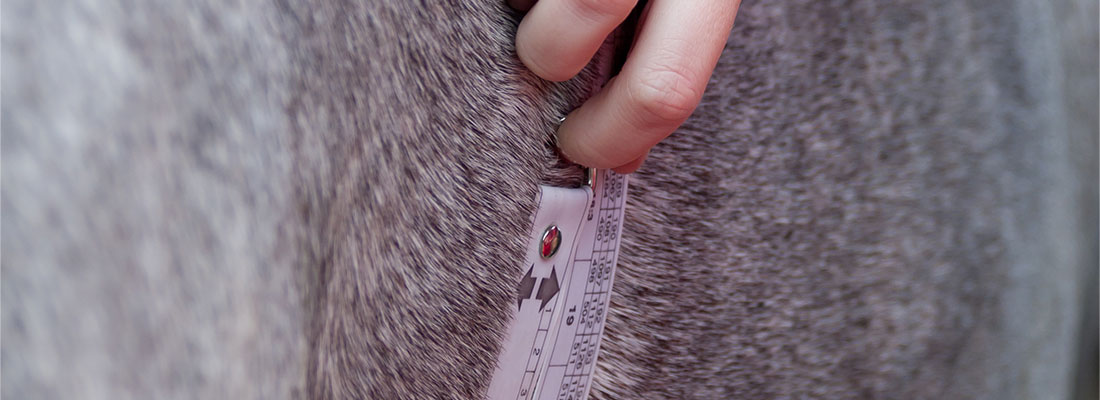
Retailers should advise customers to aim to always keep their horse or pony at a healthy body weight and condition, carrying out frequent body scoring. Those suffering from Cushing’s disease or who have had a recent attack will need maintaining on a no/low starch diet and have their access to pasture controlled.
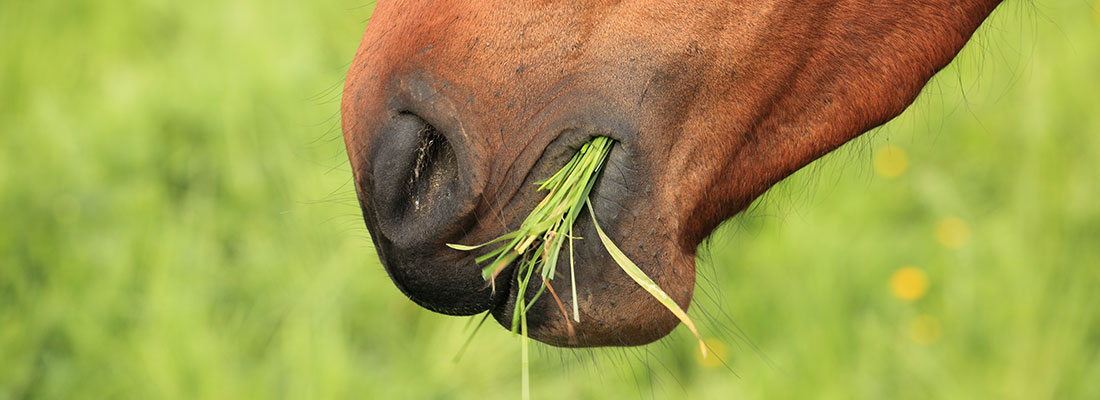
With the spring grass coming through, owners of ‘at risk’ horses must be sensible and make management choices in line with veterinary advice. A large majority of pastures are suitable for livestock but not for laminitics as they are too high in sugars. For this reason, restricted grazing is a necessary precaution. Short periods on grass at dawn before the sugars mobilise along the length of the stem, allows a laminitic field time. The bottom of the stem is where sugars are stored before being converted to fibre, so cropped grass has higher sugar content than uncropped. Therefore, the best option is out on long grass; ideally, a mature lay which has a variety of species as in an old-fashioned meadow.
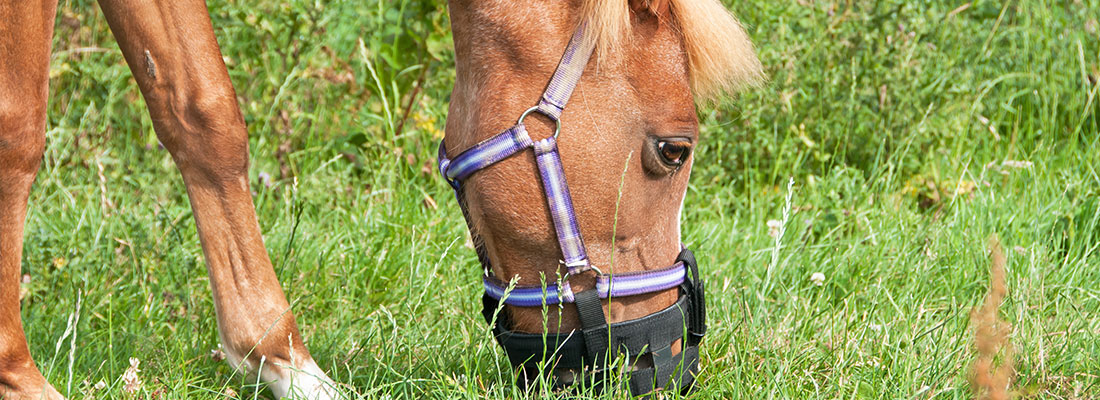
To further keep horses and ponies safe during their turnout time retailers can offer their customers grazing muzzle options.
With a huge array on the market, owners are bound to find one that fits perfectly – and securely! From robust plastic muzzles to padded nylon options, a cruel to be kind choice, that could prevent a bout of laminitis or help get the horse or pony on the right track to recovery.
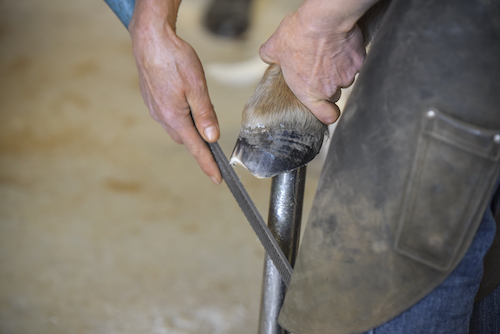
Remedial farriery is often necessary for
laminitic horses and ponies
Sole support
Supporting limb laminitis (SLL) occurs when there is severe lameness
in one limb, causing excessive weight bearing and therefore, laminitis
on the opposite,supporting limb. This type of laminitis can be prevented
by using frog or frog and sole supports in high risk animals prior to its occurrence.
Laminitis associated with inflammation can be prevented by
prompt treatment of the underlying disease and use of ice to cool the
feet in horses at risk of inflammation-associated laminitis prior to its occurrence.
Stocking a selection of supportive hoof boots, along with ‘tubbing’ equipment
could also be of great benefit to your customers.
A retailer’s role
- Never underestimate your role as a retailer - you can have immense power changing the way horse owners think – they come to you for advice and you can be the starting point in changing the way horse owners manage their horses – to educate them in an attempt to prevent another of their horses, now or in the future, from suffering laminitis. Here are some key points for retailers:
- Consider what the horse needs against how he would naturally remain healthy – ignoring fads and marketing gimmicks that encourage incorrect
feeding practices.
- Consider what the horse needs against how he would naturally remain healthy – ignoring fads and marketing gimmicks that encourage incorrect
- Remind customers that native breeds do not require hard feeds. Forage and a good balancer are all most leisure horses and ponies require.
- Avoid sugary treats – stock less of them and find healthier alternatives.
- Stock spring balances, different sized scoops and cups and feeding diaries and tiny-holed haynets to make laminitis management easy for customers.
- When stocking your boredom busters for box resting laminitics – focus on play-based toys as opposed to food-based toys to prevent further calorie intake.
- Keep a stock of a variety of bedding that can be used to provide cushioning to horses or ponies that are very sore underfoot and confined to the box.