
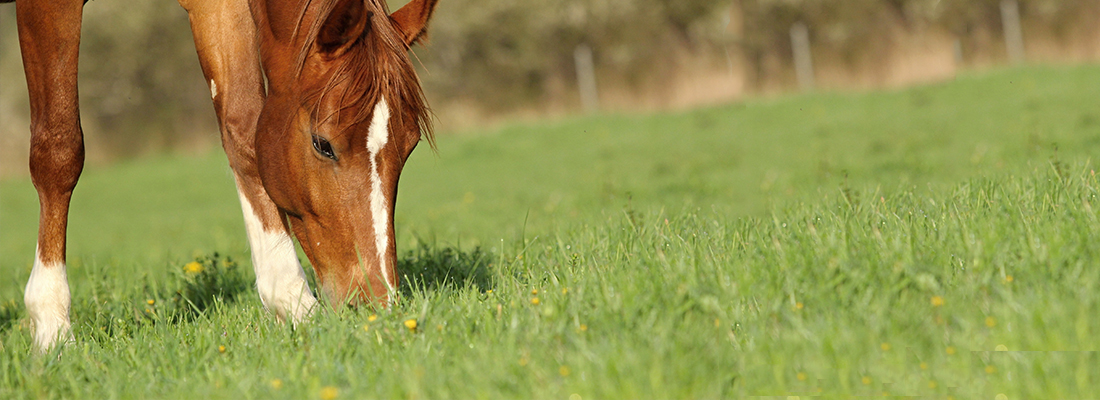

Summer coincides with a surge of additional grass and longer turnout. While forage is a fundamental element of any horse’s diet,
too much of anything isn’t beneficial, which often leaves owners constantly tackling their horses’ waistlines throughout the
warmer months.
Obesity risk
According to BEVA Member survey results in 2018, it is clear that the UK is facing an obesity crisis. A study of 792 veterinary registered equines across England, Scotland and Wales, where owners assessed their own horse’s body condition score (BCS), suggested 31% of horses were overweight. In fact, the BEVA survey saw that of the horses vets saw:
• 48.5% felt that just 25-50% were overweight
• 35.8% felt that 50-75% were overweight, while
• 3% felt that 75% or more were overweight.
These figures indicate that the general horse-owning population continues to inaccurately body score their horses, which could lead to greater veterinary intervention to reduce cases of obesity. Horses with a body condition score of seven or higher – using a nine-point scale – are considered to be obese, as fat is likely to account for more than 20 per cent of bodyweight (BWT). In very obese horses, fat mass may even exceed 40 per cent of BWT.
The Body Condition Scoring system is based on the American 1 – 9 system, which gives the assessor greater flexibility and detail for the score given. The neck, ribs and rump need to be looked at and felt in order to assess the horse’s overall condition and level of body fat. While a definition of obesity as a BCS of seven or higher is crude, it is widely used. Leisure horses should, ideally, have a BCS of five leaning towards six at the end of summer, and five leaning towards four at the end of winter; owners should use the winter months to combat their horse’s weight issues.
Clare Barfoot RNutr, Marketing and Research and Development Director at SPILLERS confirms increasing rates of obesity in equines, “Rates of obesity are considered to be as high as 70% in some populations of ponies. There are many contributing factors to equines’ ever-expanding waistlines including:
• Improved pastures due to farm diversification.
• More horses and ponies being kept for leisure purposes rather than sport.
• Leisure horses and ponies are often only in very light work, reducing their energy expenditure.
• Milder winters compounded by the overuse of heat insulating rugs.
• Changes in the type of horses owned for example more cobs and natives that tend to be good doers.
• Owners not being able to recognise when their horse or pony is overweight.”
Consequences of incorrect weight monitoring
“Monitoring weight regularly helps owners to recognise when their horse or pony has gained a few pounds. They will begin to develop an eye and a feel for surplus weight and should be able to take action to initiate weight loss before things get out of hand. Obesity in horses carries many health risks, with laminitis being one of the most serious,” said Clare.
“Laminitis is one of the most common reasons horse owners contact the SPILLERS Care-Line for advice, and not just in the spring. Management of horses and ponies prone to laminitis should focus on reducing as many of the risk factors as possible, regardless of the season.”
So why are overweight/obese horses and ponies at risk of other illnesses such as laminitis? Katie Grimwood BSc (Hons) Feed Advisor, Baileys Horse Feeds explains, “Overweight horses are more prone to insulin resistance (IR). Insulin is involved in the removal of glucose from the blood, so IR can result in a high blood sugar level, and this is a key characteristic of the condition known as Equine Metabolic Syndrome (EMS). It is thought that IR may result in a reduced blood flow to the horse’s extremities, such as the hooves, and therefore an increased risk for laminitis.”
Obesity and weight gain have been demonstrated to have a number of negative consequences on health, including:
• Increased risk of laminitis
• Poorer recovery from laminitis
• Undesirable behavioural traits
• Increased blood pressure
• Increased risk of hyperlipaemia
• Impairment of normal thermoregulation
• Altered oestrous cycles and decreased fertility
• Greater risk of osteochondrosis dissecans in foal born to obese mares
How to monitor weight effectively
Clare describes the best ways for horse owners to monitor their horse or pony’s weight correctly, “Weigh tapes, although not always very precise, can help owners to monitor changes in bodyweight easily. A weighbridge is the best option though, as it will provide a more accurate weight measurement and will give a useful reference point for future weigh taping. Ideally your customers should monitor weight on a weekly basis, not only with a weigh tape or weighbridge but also by body condition scoring.”
“Learning how to condition score will help your customers determine how much fat their horse is carrying. Whether they use the 0-5 or the 1-9 condition scoring scale the most important thing is to ‘feel’ rather than ‘see’. Fat and muscle feel different; fat is softer and spongier while muscle is firmer and defined,” Clare finished.
“Taking regular photos is also helpful for identifying changes,” Katie adds.
Feeding a controlled diet
“The contribution of forage is important when aiming for weight loss, as this represents the largest portion of the diet, but fibre requirements should still be met for optimum digestive health,” comments Katie.
Access to pasture is always desirable as it allows expression of normal behaviour; however, when pasture access is maintained, it is very difficult to estimate calorie intake and a tendency exists to underestimate overall feed/calorie intake. Katie advises on ways horse owners can restrict grass intake, “For those turned out to grass, strip grazing should be considered. Even though being out on grass can be helpful to encourage movement, for overweight horses or very good doers, it may become necessary to take them off the grass at least for a portion of the day and either stabling them or offering turnout in a sand pen or yard with supplementary soaked hay.”
“To keep fibre intake up whilst minimising calories, hay can be soaked for up to 9-12 hours. When beginning to soak the hay, it is important to increase soak time gradually to allow the horse to get used to the different taste and their digestive system to adapt to the increased moisture intake. In very hot weather, hay should not be soaked for more than 1-3 hours, to minimise bacterial build up.”
When conditions are favourable, non-structural carbohydrate levels in grass can exceed 30%, comparable to levels in many cereal-based proprietary feeds. Sand or woodchip areas of turnout would be preferred as complete control over the diet is retained. Clare advises on the downfalls of horses and ponies on restricted diets or forge only rations, “Although grass can often meet the energy and protein requirements of most ponies and native types you can’t rely on it to provide a balanced diet. In this situation a balancer is ideal as it will provide pasture-balancing nutrients to meet daily requirements without unwanted calories. Balancers also contribute little in the way of sugar and starch due to their low feeding rate making them ideal for natives and those prone to laminitis.”
Top Tip
Hungry horses need to be monitored to ensure they do not ingest large quantities of bedding or other material, such as straw, hemp or wood shavings. Grazing muzzles can be an effective means of reducing pasture intake, although their effectiveness varies with design and between horses; reductions in dry matter intake from 30 per cent to 83 per cent have been reported.
“In some cases where active weight loss is sought it may be necessary to provide an alternative low-calorie forage source (not less than 1.5% bodyweight per day on a dry matter basis). Replacing pasture with suitable (less than 10% (on a dry matter basis) water soluble carbohydrate, WSC) hay, haylage or a forage replacer will help replicate natural browsing behaviour whilst controlling calories and WSC intake,” added Clare.
Exercise levels
It is crucial that horse owners are feeding their horses correctly, so calorie intake matches their level of work. “Regular monitoring of weight and condition is important, and the diet can then be adjusted accordingly. Low, medium or high calorie options are usually available for different workloads,” explains Katie.
Clare explains how to feed those who are underweight or overweight, in work or at rest, “Whatever the workload, horses usually get fat because they receive more calories/energy in their diet than they burn through activities such as exercise, keeping warm and just the daily energy required to keep them alive (basal metabolic rate). The diet needs to be based on calories/energy for their current condition and not on perceived workload.”
“If a horse or pony is not in any work but is underweight, they need more calories and should be fed accordingly. Conversely if a horse is in medium work but is overweight, they need to have their calories restricted but will still need a balanced diet to support their requirements for athletic demand – again this is where a balancer is very useful.”