

April presents a challenging time for horse owners. With changeable weather, comes a fluctuation in horse coats. One week they are heavily shedding their thick coats, until the next temperature drop and it all grinds to a halt again. Whatever stage a horse is at, there are many things you can advise your customers to do.
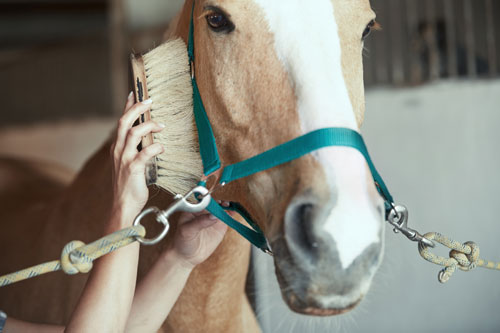
Grooming should be part of every horse's daily routine
The competition season is just around the corner, so many horse owners will have begun the ‘spring tidy up’. Clipped or not, it’s impossible to stop coats becoming slightly duller over winter due to rugging. There’s only so much you can do to the outside of a horse to make it shine – too cold for regular bathing, and no sun to provide that all essential vitamin D. However, one thing horse owners need to address more than anything to help with coat and skin condition, is adequate nutrition.
Next in most diaries will be competitions, training days, camps, clinics and a whole lot of fun, and owners will want their horses looking their best. This will lead to increased sales of high-oil feeds to help maintain condition and shine, so look at stocking a
selection of oil- based feeds and additives for your customers. It is crucial that coat health is firstly addressed by the diet. “The real look of wellbeing comes from the inside out, so first and foremost is to get the feeding right with a balanced diet that is appropriate for each individual horse,” said Jayne Ross, Absorbine Brand Ambassador and seven times Horse of the Year Show Supreme Championship winner.
Horses, just like us, need vitamin D to be able to absorb calcium to help maintain strong bones. A lack of sunlight over winter can leave horses deficient, which is where the addition of a balancer can prove very beneficial. Vitamin E is an antioxidant that horses absorb through fresh forage. Both vitamins D and E are fat-soluble, meaning they’re absorbed by dietary fat in the body, indicating that fats help horses process vitamins.
The real look of wellbeing comes from the inside out
Fats/oils that are high is Omega-3 and low in Omega-6 are the best type to feed, such as micronised linseed, as this provides the lowest number of inflammatory markers. Adding Omega-3s to a horse’s diet promotes healthy skin and might also boost the immune system and combat a variety of inflammatory conditions. In any case, advise owners who want to support the development of a healthy, shiny coat to ensure their horses are getting enough of these necessary nutrients.
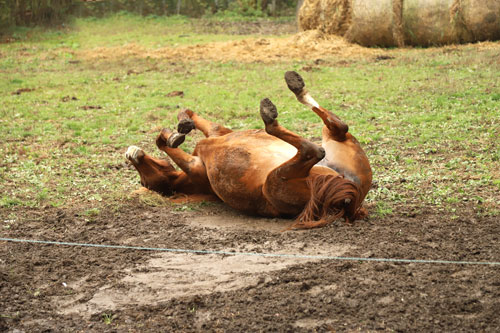
Advise customers to let their horse dry before turning him back out – they cannot help but roll!
Elbow grease
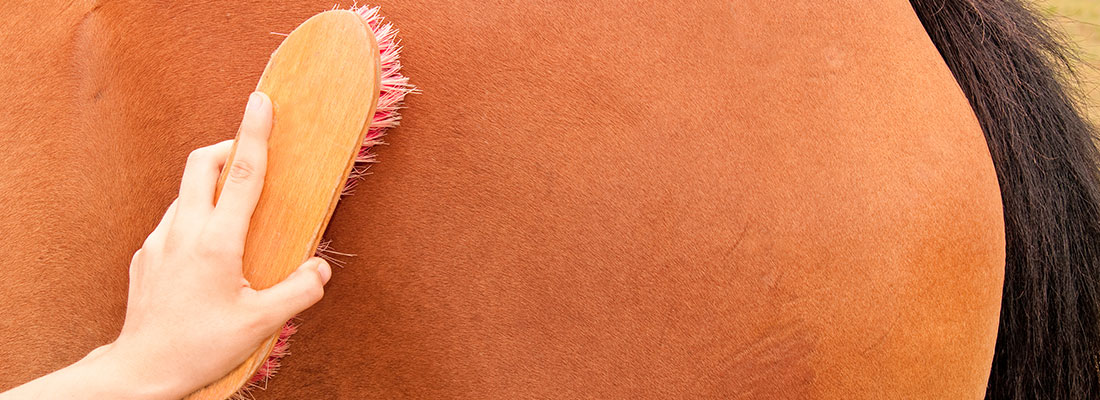
Once horse owners have addressed their horse’s diet, they next need to look to their grooming routine. Daily grooming is crucial to coat and skin health and ensures horse owners are able to check over their horse/s for knocks and bumps as well as any skin conditions. Ensure your shelves are stocked with an assortment of brushes, from rubber curry combs and shedding blades to help remove loose hair, to specific mane and tail brushes and essential kit for plaiting. Anything associated with bathing, from sponges, to shampoos and stain remover are all easy sellers come the spring. Educating yourself on which shampoos suit what types of colours and coats will help you to help your customers make informed decisions about what products to go for. It’s also ideal to have an understanding of the ingredients that go into each brand of sprays/shampoos/oils in case a customer has a horse allergic to a common ingredient, such as silicone, which is commonly used in most detanglers.
In healthy horses, the coat shines due to oils derived from the skin. Just as in humans, oils are released by sebaceous glands, and they move naturally down to the ends of the hair as the horse is groomed. A rubber curry comb is ideal for loosening dirt, scurf and grease. Be sure to stock a variety of brushes in different sizes to cater for children too. Selling a variety of washing mitts and cloths manufactured for hot clothing are also good to cover all your bases. Perhaps you could investigate matching grooming kits for children wanting to join in with the current ‘matchy matchy’ trend.
Bath time
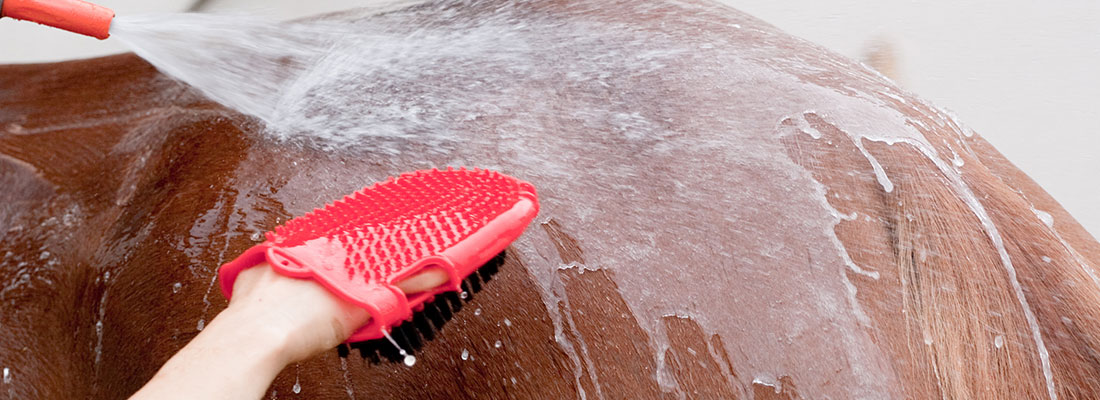
The question “how often should a horse be bathed?” is an open ended one. Advise customers not to over-bath their horses which can dry out the skin and coat and that a thorough rinse with water is likely to be a better option for daily sweat/dirt removal.
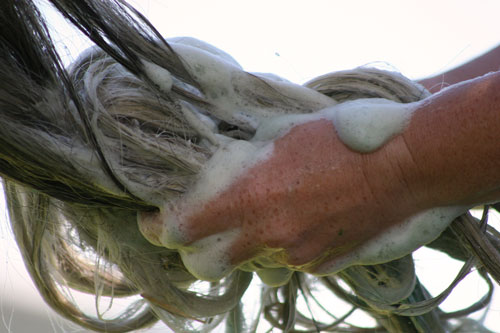
If washing daily, it is recommended to use just water, to prevent the coat and skin from becoming too dry
Obviously if a show is looming, a good bath may be the only option. Remind customers to pay attention to their horse’s skin and coat and to choose a shampoo that is best suited to them – one for sensitive skin for example, or a purple-based one for a grey horse. For a successful bathing session, it’s important to have the right tools for the job. When using a shampoo, it's important to use products specifically made for bathing horses, as other products can remove natural essential oils and dull the coat or dry out the skin.
For a successful bathing session, it’s important to have to right tools for the job.
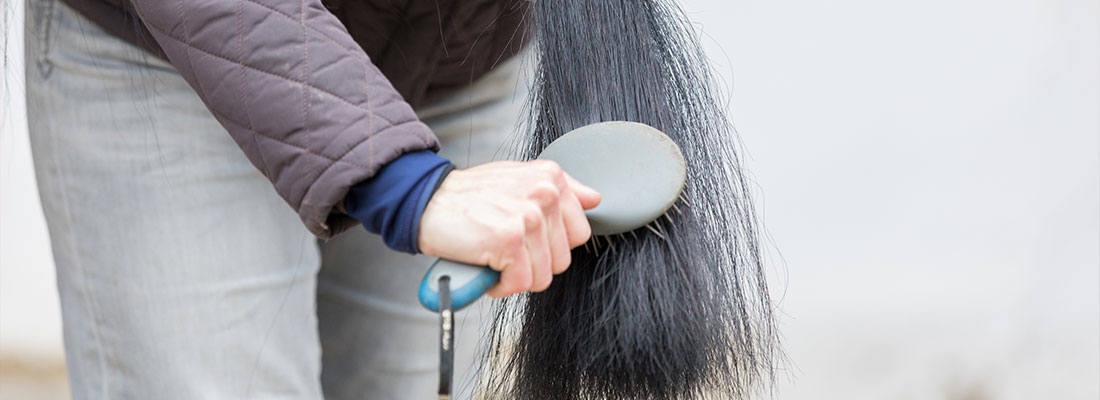
“Tails are washed more frequently, especially white tails to prevent a build-up of yellow staining. A detangler is applied to their tails even while wet, to make them easier to comb through when they are dry,” said Jayne.
Why hot cloth?
“Hot clothing provides a soothing and refreshing means of grooming as well as applying extra shine. It's ideally best to use this method on clipped or shorter summer coats. It will accentuate the natural shine of a horse in good condition and moisturise and condition the skin as well. This is particularly good after the coat has been clipped to re-generate the natural oils by massaging and applying heat directly to the skin,” said Vicky Goody, owner of Smart Grooming.
Hot clothing can be done in two ways:
- Hot clothing using a wash off lotion – such lotions contains ingredients that soothe and remove excess grease before clipping or applying the hot cloth shine method below.
- Hot clothing using a lotion or oil - this method is applied directly to a groomed, clean and grease free coat and gives the edge on outstanding shine and condition when applied all over with a hot cloth. It can also be used as a weekly enhancement to ensure the skin is kept moisturised and soft and the coat shiny and sleek and on a regular basis during the winter and prior to clipping.
To clip or not to clip
An additional approach to keeping the coat healthy and the horse comfortable is by clipping. “With hairy coats early in the year, it is tempting to clip. If horses are working up a sweat when ridden, then it is good to get them clipped as it helps them to keep their condition and they dry quickly after working. However, it is important not to damage the new coat coming through, so we do not clip the dark coloured horses after February,” said Jayne. “Greys usually do not change colour with clipping so can be clipped later.”
When it comes to trimming for the competition season, opinions vary due to the breed of horse and the discipline. For showing, pulled tails and manes are a must for some, whereas natives can be left natural. For eventing and dressage, there is more variation as it is down to personal preference, so some will trim and others won’t. “Trimming is very important to give definition to the head, ears and legs. A quiet battery clipper can be used to clip the ears and under the chin as well as removing excess feathers on their legs. Cobs are hogged and all the horses have pulled tails,” finishes Jayne. Look into stocking a number of quiet battery trimmers to help support those customers that need to address final touch ups prior to a competition.
Ring side finish
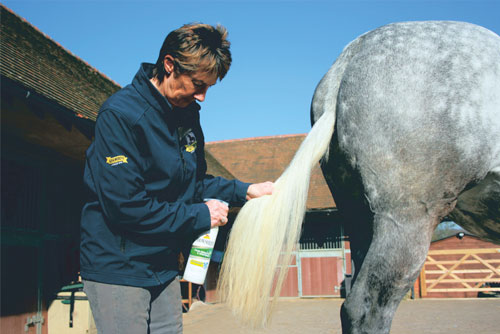
Grey tails are commonly washed more frequently, in
order to prevent any yellow staining
An important element that retailers shouldn’t overlook is how the products are displayed in store. It could be beneficial to produce a specific ‘spring coat care’ display positioned centrally in your shop, where everything a discerning horse owner may need to
get their horse or pony in tip top condition. You could even place oil-based feeds around the display too to help entice an add on purchase.
If you position all the associated products together you increase your chances that customers will splash out on the new competition season’s essential bits of kit due to the proximity to the one product they came in for. A big display also draws the eye to it and may encourage spontaneous purchases from people that didn’t plan on purchasing coat care products at all. Whatever you decide, make sure the display is eye catching, with offers to draw customers in.