
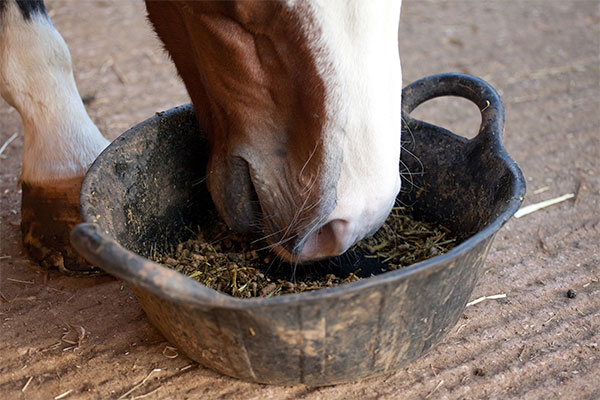
Equine Nutrition: The buzz around balancers
With the spring nearly upon us, horse owners are no doubt, turning to their feed choices with earnest. The promise of lush spring grass leads to diets being reduced, but this shouldn’t be to the detriment of the horse’s nutritional requirements. Although many can maintain weight on grass alone, some still need additional supplementation.
Balancing a horse’s diet for weight management, whilst meeting its digestible energy requirements is extremely important, and sometimes overwhelming for horse owners – especially if their horse or pony has additional medical issues such as laminitis or ulcers. However, a horse requires other nutrients that should be considered when looking at the overall diet. Any good feeding program should be based on the following principles:
- Meets the nutrient needs for the animal
- Maintains a healthy and functioning digestive system
- Offers feeds of the highest quality that their money can buy
Water
Water is the most important nutrient for the horse, but it is often overlooked. Horses should have access to clean fresh water at all times. A dehydrated horse can be at risk of colic (from an impaction) and general lethargy. Physiological states obviously play a huge part in their fluid requirements. A lactating mare will require significantly more water than a horse at ‘rest’. In general, a 500 kg horse will drink approximately 30-45 litres per day however, how much horses actually drink will largely depend on diet. For example, a horse that’s turned out, will drink less than a horse eating hay because the pastured horse takes in water with the grass. It’s advisable to offer horse a warm bucket of water, sweetened or otherwise if they are reluctant to drink cold water. It is proven they prefer water at room temperature than ice cold – even in the summer!
Horses require several minerals to meet a variety of functional needs, including skeletal integrity and cellular communication. The macro minerals (those needed in relatively high amounts) include calcium, phosphorus, sodium, potassium, chloride, magnesium, and sulphur. Trace minerals are needed in relatively small amounts. These include cobalt, copper, zinc, selenium, iron and iodine. Vitamins are classified as water-soluble or fat-soluble. The fat-soluble vitamins include A, D, E, and K while the water-soluble vitamins include the B complex and vitamin C. Some of the microbes located within the large intestine have the ability to synthesize the B complex vitamins and vitamin K.
Horses and ponies that are predominately on a forage-based diet, can sometimes fall victim to having a feed that lacks in these certain additives. It is difficult to know exactly what levels of vitamins, minerals and quality proteins that are in the grass or hay, which is especially important as these are needed to help maintain condition and energy levels during exercise and even for normal bodily functions. Forage in the UK is commonly low in these crucial elements, including vitamin E, zinc, copper and the quality protein, lysine – which is where feed balancers have been introduced to the market.
Common misconceptions
- Balancers improve condition/weight. Horse owners commonly believe that balancers are ideal for weight gain. This is incorrect, as the job of a balancer is to provide the horse with the vitamins and minerals that would otherwise be lacking in their forage.
- They are high in starch and sugar. As balancers are full of negligible calories and are fed in such small quantities, they are not high in starch and sugar and are therefore, perfect for good doers or laminitics.
- They lead to increased excitability. Energy levels in horses are affected by either a high level of cereal starch and sugar in the diet, or if the horse is consuming more calories than it needs. Therefore, balancers that support a forage-based diet will aid the horse’s general health, wellbeing and performance, without affecting energy levels.
- Balancers are more expensive. Actually, it’s the opposite. Low feeding rates (typically 500g cup per day for a 500kg horse) mean balancers are very cost effective. Depending on size, a bag of balancer will typically last 30-40 days for 500kg horse.
- Stop feeding balancers when the grass is richer. Although grazing during the spring and summer can easily exceed calorie requirements, certain nutrients such as copper, zinc and selenium are usually still low.
- All balancers do the same thing. A good balancer will supply the right combination of nutrients to balance the base diet of the type of horse or pony they are designed for. Many contain added functional ingredients such to support specific needs. There are numerous balancer options, such as stud balancers, lite balancers for good doers and senior balancers for veterans to meet the needs of all horses and ponies.
When to feed
Balancers should be introduced to the diet when the horse isn’t receiving the recommended amounts of mix or cubes due to factors such as being in light work or being over-weight. If the recommend level of hard feed is given, then the horse will be receiving all the vitamins and minerals he needs to maintain a balanced diet.
If a horse maintains his weight on a diet of just forage, or he’s in hard work and maintains his weight on a low energy feed which are designed to support him when he’s in light work, feeding a balancer should be considered. Also, if straights are fed or feeds that don’t contain additional vitamins and minerals, adding a balancer will ensure the diet is fully balanced.
Anna Franklin, Brand Executive at Blue Chip Feed explains the advantages of using a balancer in the diet. “Feeding a balancer gives horse owners the assurance that their horse is getting the correct balance of protein, vitamins, minerals and nutrients to meet their daily requirements. A balanced diet is rarely supplied by grass and/or forage alone, so a balancer helps to level out naturally deficient nutrients such as copper and zinc,” said Anna.
“Fizzy behaviour is avoided due to low sugar and starch levels, and feeding small meals mimics natural trickle feeding which supports gut health. There are balancers that are suitable for a wide range of horses, from good doers to performance horses.”
“For horse owners, feeding a balancer is more cost-effective as they are cheaper to feed when daily feed costs are broken down. This also means less frequent feed purchasing as an average 500kg horse will use one bag a month – and a lesser need for additional supplements, saving even more money!” said Anna.
Alternatives
An alternative option to feeding a balancer is to use a broad spectrum, powdered vitamin and mineral supplement or lick that is added or offered in the existing diet. However, as the supplement is described as ‘broad spectrum,’ this means that it will not be specifically tailored to your customers horse, leading to a diet that could still lacking in certain elements. These supplements do not usually have the additional quality protein that a balancer would have, however for some, a supplement may be perfect for horses and ponies at rest or light work.
Suitable for all
A balancer can be suited to any diet. When advising your customers on what balancer would suit their horse or pony, consider the following:
- Age
- Workload
- Existing medical conditions
- Additional requirements, such as joint support, digestive health or calming for example.
Anna goes on to explain how a balancer can be suited to all types of horse or pony. “Super concentrated balancers are ideal for good doers whether they are competing or in light work. Whereas performance horses or those needing condition and to obtain the full nutritional range from their diet would also benefit from an appropriate balancer, alongside a quality conditioning feed such as alfalfa.”
“There are now balancers on the market that target specific types of health issues too. A balancer that is ideal for laminitics is high in fibre and contains functional ingredients to assist with digestion and hind gut health. For competition horses and growing young stock, there are balancers that are higher in protein, with elevated levels of vitamin, minerals and nutrients for the increased levels of stress due to competition schedules, competing away from home, box rest and veterinary care, or simply from growing youngsters,” finished Anna.
How to feed a balancer by Anna Franklin, Brand Executive at Blue Chip
- Most balancers are fed depending on the weight of the pony/horse.
- Using a weigh tape is advisable to calculate an approximate weight, or a weigh bridge if one is available.
- Balancers are designed to be fed alongside a fibre-based diet. They can be fed on their own alongside grass and/or hay/haylage. They can be fed alongside a chaff and/or with a fibre mash.
- There is nothing to stop balancers being fed alongside additional feed if you are looking for further condition and/or energy.
- Super concentrated balancers can be fed from the hand, useful if feeding horses in a herd or for those who live out 24/7.
- When fed alone, balancers can be placed in a treat ball to prolong meal time.
Whether a customer is looking to provide the basic dietary requirements for their horse or pony, or provide additional benefits, there is a balancer suited to needs, without any risk of weight gain, which is crucial as we head into spring.