
National survey reveals ‘worrying’ picture due to cost of living crisis climate change
The National Equine Welfare Council has released the results from their latest cost of living survey, revealing significant challenges faced by horse owners.
Over 6,000 horse owners from across England, Wales, Scotland, and Ireland participated in this year’s survey. The findings indicate a worrying trend: 81% of respondents expressed concern about the increased costs of horse care. 39% reported that the crisis had a medium or high impact on their ability to keep their horse, necessitating additional sacrifices to provide basic care. An increase in vets’ fees was reported by 80%, farrier services by 65%, and insurance by 62%. To cope with these costs, 20% of respondents had taken on another job or increased their working hours. A small but significant number (2%) were considering relinquishing their horse to a charity, and 5% were contemplating euthanasia.
One anonymous respondent shared, “I can’t afford to call vets out of hours anymore. I rent a field and can’t afford a proper horse shelter or stables. I can’t afford the farrier regularly anymore.” Another commented, “Everything increased resulting in it becoming impossible to continue to keep my horse in work, so she’s now been retired to a field.” A third mentioned going without food to feed their horse every month.
Despite these pressures, many owners highlighted the value of their horses to their mental health. One respondent noted, “I have less money than ever, I didn’t know I wouldn’t be able to work when I got my horse, now I’m going without food/ heating/ diesel to provide for him. I have a life-limiting illness which has brought on pretty severe mental health problems, as well as dire financial stresses. If I didn’t have him, I’d have no reason to live but I can’t afford him.”
For the first time, concerns about climate change were also prominent. Respondents noted the impact of bad weather on their grazing and the resulting turnout challenges.
Rebecca Boulert, Education Officer at World Horse Welfare, stated, “We know from last year’s research that many owners were just about coping, all possible cost savings had already been made, so they really were feeling the pressure. This year’s survey shows that these problems are just not going away. Owners’ main concerns for the coming year are how they are going to afford even essential items like vet costs, emergency care, feed and forage. For us as welfare organisations, it makes for very concerning reading, and of course as charities we are also facing increased costs and reducing donations. It’s a worrying picture.”
Despite the challenges, some positive outcomes were reported. Horses were being turned out for longer or full time, beneficial for their physical and mental health. Owners were opting for testing-led worm control methods, effective in tackling anthelmintic resistance, and many were using a forage-based, low concentrate feed, satisfying their horse’s physiological and behavioural needs.
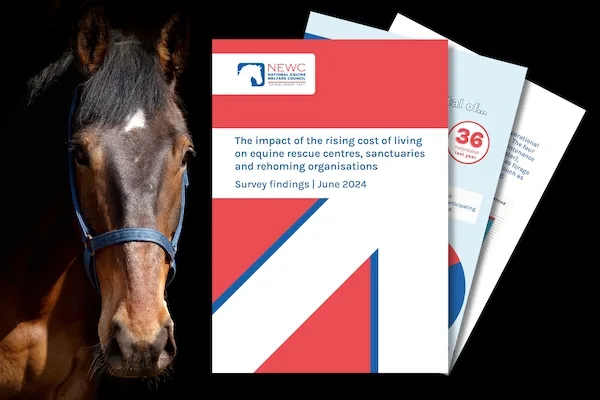
The 2024 survey received 6,143 responses. A tailored version of the survey targeted charities and equestrian rescue centres, revealing a rise in operating costs against a fall in donations, with more welfare enquiries indicating an increasing number of horses requiring care.
The results of both surveys will be shared with the UK Government, devolved administrations, and local authorities to inform their understanding of the situation and policy decisions, including potential financial support to those most in need.