
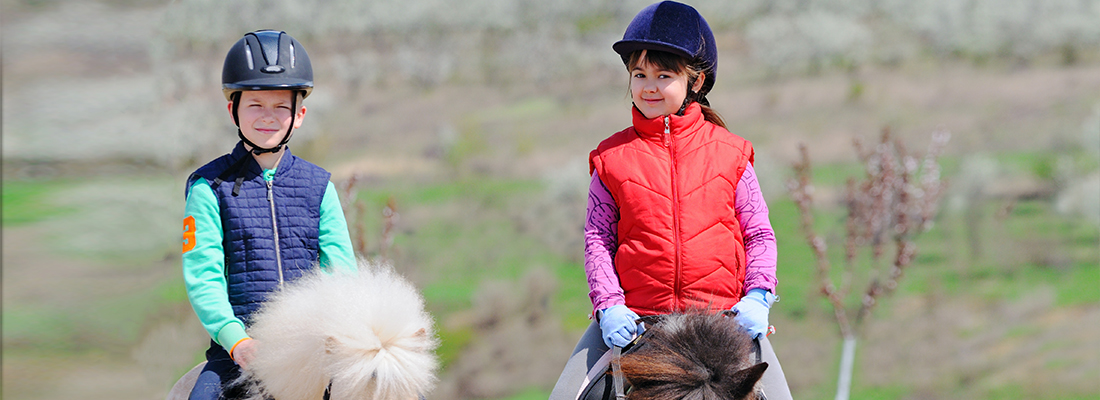

They may be little in size, but children and ponies make up a huge part of the equestrian retail sector. Horse riding is not just a sport, it’s a heritage lifestyle and therefore tends to flourish within families – some children being sat in a saddle before they can walk.
A child is likely to need just as much riding equipment at any one time, if not more, than an adult. The big difference being that
children will often out-grow clothing and equipment way before it’s worn out. This can greatly affect customer choices, especially in the early years. Ponies are slightly different as once fully grown, they obviously will not out-grow their numnahs or rugs, but a child may outgrow their once-loved ‘Barbie pink-everything’ phase! This often leaves parents replacing equipment or clothing on a
regularly basis.
We looked at what is important to these customers when purchasing products for their children and their ponies.
A burst of colour
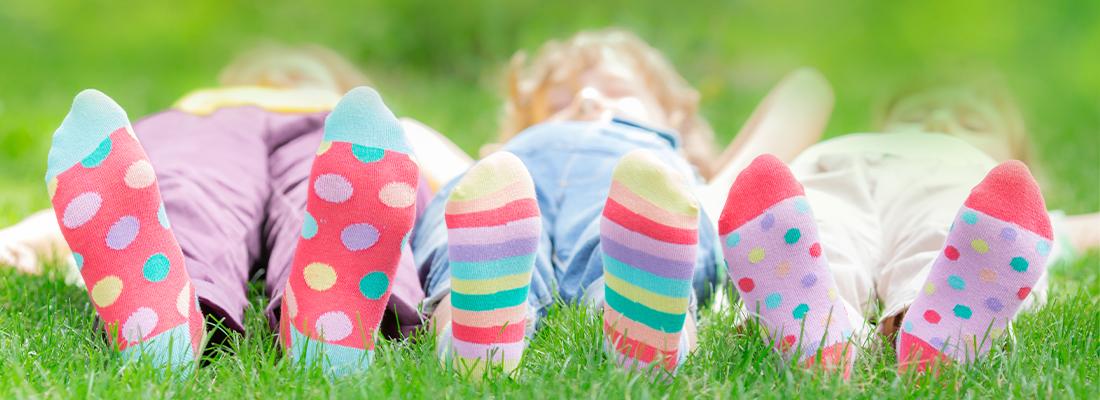
Children, especially those at an early age and regardless of sport or activity, like bright colours. This is not simply because they appear more ‘fun’. Children prefer these colours as their eyesight is still developing. They are most fond of primary colours: red, yellow and blue. They are also drawn to green, purple and orange, but less drawn to beige, grey or light pink. They notice these hues much easier than fainter or darker shades as well as neutral colours. Bright and contrasting colours stand out more in their field of vision and are more likely to capture their attention. As they use the colours to make sense of the world in their early months/years, they find bright coloured objects more appealing and stimulating.
With this in mind, manufacturers produce clothing and riding equipment that appeals to children. Alongside bright colours, patterns are becoming increasingly popular. Easy shapes to recognise such as, stars, hearts and flowers are the most commonly used on saddle pads, rugs and clothing. There is a huge amount of stock available on the market, without seasonal releases, meaning you can cater for all your customers.
Children and ponies are a huge contributor to the ever-growing ‘matchy-matchy’ trend too. Look at brands that offer complete matching sets including; saddle pads, boots or bandages, fly veils, hat silks, riding gloves, whips and clothing. These are perfect to buy as a full set for birthdays and other gifts, or equally, many customers like to pick and choose different elements of the set too.
Riding wear such as jodhpur boots and half chaps are now produced in many more colours than traditional brown and black. It is common to see little riders in brightly coloured boot and chap combinations. Neoprene is a very common material for childrens half chaps as they are lightweight to wear, comfortable, easy to clean and are available in an array of colours. They are also cheaper than leather chaps, which is why they are a preferred option for growing children. Most parents will opt for a cheaper product when it comes to childrens footwear and clothing because of this.
A child that wants everything in a certain colour – really does mean ‘everything’. This extends to yard items such as feed bowls, water buckets, feed scoops and grooming kits. Many manufacturers make complete grooming kits specifically for children, where the bristles are all the same colour, the brushes made for tiny hands, and often have a unicorn sponge included too. These kits are best if they come in a small rucksack-type transparent bag – an easy way for young children to carry their own grooming kits around the yard.
Personalisation
Children also love to personalise their clothing, their pony’s saddle pad or rug. Consider whether it could benefit your business if you are able to offer an embroidery service, or work with an outside embroidery company to allow customers to arrange personalisation directly upon purchase.
Safety first
Something that is usually at the forefront of most parents’ mind, is keeping their child safe whilst riding. We all know that riding horses is an extremely rewarding, yet dangerous pastime, so it stands to reason that parents will want to protect their children as much as possible whilst doing so. Having a stock of safety equipment from the tiniest of riders through to adults is key for a good retailer. Contact each manufacturer so you are able to fit as per their guidelines, as they are all slightly different.
For helmets, a skull cap is one of the most popular choices for children. They are well padded and are designed to be one of the safest helmets available on the market, which is why they are compulsory for taking part in cross country. They have standard, soft nylon chin straps, a well-padded inner and have an easy plastic clip, and can now been seen in many other colours, such as gold, silver and pink – not just standard black.
Having no attached peak, these hats are perfect for children as they allow them to personalise their hat and choose a hat silk of their choice. Some small riders will already be taking part in showing, and therefore will need a traditional velvet-covered helmet. These hats are a different shape to a skull cap, and usually feature a nude/tan coloured chin strap to create a smarter look for the show ring.
More often than not, a child will also wear a body protector. They are designed to absorb some of the impact when falling off, being kicked or stood on. They help to prevent injury and provide parents with peace of mind whilst their child is in the saddle. Most body protectors for children are similar in design – they go over the head and are secured with big Velcro tabs on the sides with a plastic clip, and with Velcro tabs over the shoulders, providing a secure fit. Generally, body protectors are blue or black, but some companies offer other colours, such as pink, that appeal to children. Fit is crucial for a body protector, child or adult. Ensure you have a saddle horse for customers to sit on during a fitting. It is the only way to know whether the length is truly correct. If it is too long, it can be shunted into the back on the neck in a fall, causing more damage. It can also get caught on the back of the saddle, impinging the rider’s movement. Too short, and it will not be protecting the back as it should.
A customer’s view
Equestrian Business posted a question to the masses on social media to find out what customers want for their children and pony products.
The general consensus appeared to be that the desire to match everything has only increased as children have got older. One parent stated that her child assigned a colour specific to each pony, but by the time her daughter was 13, this stretched to one specific colour to everything – orange, which included the headcollars, saddle pads, brushing boots and ear bonnets. Another parent added that she would like to see more clothing available so that mums can match their children, as she personally, has never seen it done before.
Price also featured as a popular deciding factor. Many stated that it was rare to regret opting for a cheaper item, in terms of quality of the product. However, one item that many said they wouldn’t buy cheap, was riding gloves. It became apparent from the responses, that although price is a factor, durability and longevity were more important. One parent said they often look for second-hand quality brands for growing children. Retailers are in a prime position to be able to offer a second-hand area to their shop, appealing to a large group of people wanting quality products, at a lesser price.
Safety also appeared to be of interest. A number of people mentioned a good set of balance support reins were a staple bit of kit for children, as well as sticky seated jodhpurs, balance straps and mounting blocks with a rail to help prevent falls.
What we’re lacking…
Any worm treatment administered can be voided if paired with poor pasture management. The lifecycle of larvae is usually underestimated by horse owners. It is around a week and in that time can quickly infect the rest of the pasture. Ideally, paddocks should have droppings removed daily to prevent reinfection, however the longest it should be left is one week. Removing droppings regularly helps to reduce worm burdens and also the need to administer wormers as frequently.
Wendy advises on further paddock management, “Some of your customers may be in a position to create smaller paddocks so that each field can be alternately grazed, harrowed and rested. Ideally paddocks should have low numbers of horses per acre to reduce the burden on the field. Cross-grazing with sheep and cattle Responses also highlighted that there are common products and items that are hard to find for children and small ponies. Here are some examples:
• Extra small martingales
• Extra small bits
• Saddles under 16”
• 16” saddles with long flaps
• Wide chested and deeper rugs
• Easy release headcollars
• Childrens riding leggings
• Items made for small hands – especially quality riding gloves
• Headcollars for ponies in between pony and cob size